
After surgery, your weight will continue to decrease and soon you will have
recovered physically from the surgery. It is then that the success of the surgery
equally depends upon you as much as the surgery. It will require a lifetime of lifestyle
and nutritional changes for best and sustained results. Problems (like weight gain)
can occur after, but should not be inevitable. There are a few tips that when followed
can help you cope with the changes to your stomach after surgery Once you have decided that weight loss surgery is for you, the next major step is
which operation is best for you. This can sometimes be straight forward but
commonly requires deciding between the "pros and cons" of each. For instance,
smoking and acid reflux would generally mean that a Gastric Sleeve and Gastric
Bypass respectively would be best for you. As part of your care team, I provide dedicated nursing support throughout your weight loss surgery journey. My role is to support you through each stage of the process, from preparation for surgery through to your recovery. This includes providing clear guidance, practical education, and ongoing support to help you feel informed and well prepared. The cost of surgery includes Private hospital, Surgical and Anaesthetist
charge. Please note that there will be additional costing if a repair of hiatal hernia, or
if you have had previous weight loss surgery ( "Redo surgery"). Optifast is a meal replacement which is very low in calories and high in protein. It is
available in shakes, soups, bars, and as a dessert. Protein malnutrition can occur for a number of reasons including poor dietary choice,
anastomotic stricture or protein malabsorption (short gut). It may present several
years following surgery. Protein energy malnutrition is accompanied by oedema. In
all cases of suspected protein malnutrition the patient must be fast tracked back the
Bariatric team The Gastrointestinal tract (gut) is a complex system of hormones, enzymes and feedback-systems
that
control
the absorption of food, the bodies response to and desire for more food (Satiety). Surgery
alters
the
gut to
achieve both weight loss and better metabolic control of the absorbed calories / glucose. This is
achieved
by
RESTRICTIVE, MALABSORPTIVE (or a COMBINATION OF RESTRICTIVE / MALABSORPTIVE) types of surgery. You will have told you how long you need to follow this diet before surgery. This depends on
your personal treatment plan. IV Omeprazole change to oral Pantoprazole 20mg dailyBariatric (Weight Loss) Surgery
After Recovery
Bariatric (Weight Loss) Surgery: Bariatric flowchart
January 1, 0001Bariatric (Weight Loss) Surgery
Bariatric flowchart
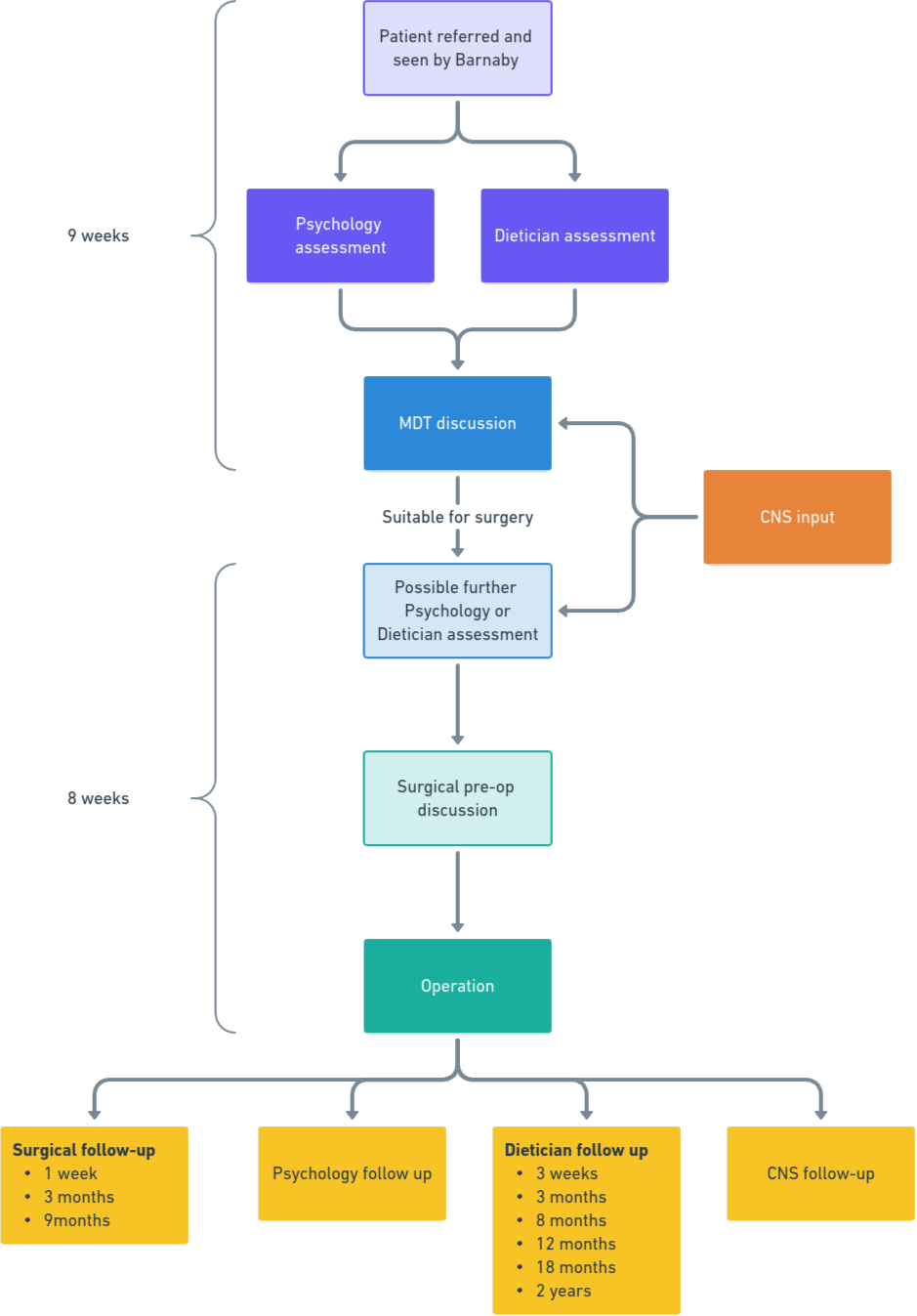
Patient journey
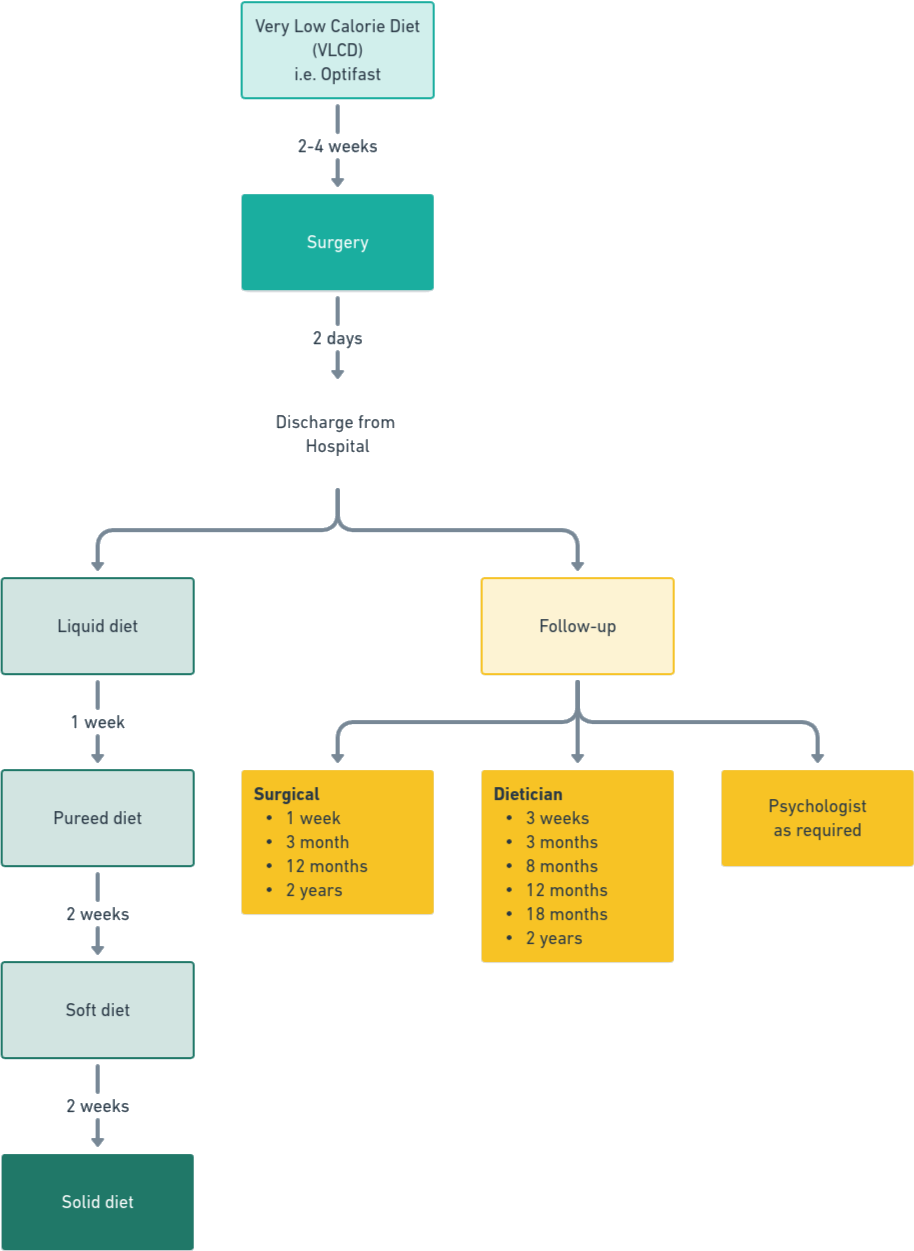 * Clinical Nurse Specialists (CNS) phone calls throughout.
Bariatric (Weight Loss) Surgery: Choosing the right operation for you
January 1, 0001Bariatric (Weight Loss) Surgery
Choosing the right operation for you
Bariatric (Weight Loss) Surgery: Clinical Nurse Specialist
January 1, 0001Bariatric (Weight Loss) Surgery
Bariatric Nursing Services - Tauranga
Chloe McCormick, Registered Nurse
Bariatric (Weight Loss) Surgery: Cost
January 1, 0001Bariatric (Weight Loss) Surgery
Cost
Bariatric (Weight Loss) Surgery: Dietician advice
January 1, 0001Bariatric (Weight Loss) Surgery
Dietician advice
Before your Surgery
What is Optifast?
Bariatric (Weight Loss) Surgery: GP info
January 1, 0001Bariatric (Weight Loss) Surgery
GP info
Nutritional deficiencies - What to look for post bariatric surgery
Protein malnutrition / protein energy malnutrition
Bariatric (Weight Loss) Surgery: How does weight loss surgery work?
January 1, 0001Bariatric (Weight Loss) Surgery
How does weight loss surgery work?
Bariatric (Weight Loss) Surgery: Optifast Diet Instructions
January 1, 0001Bariatric (Weight Loss) Surgery
Optifast Diet Instructions
Bariatric (Weight Loss) Surgery: POST OP PROTOCOL; Gastric Bypass
January 1, 0001Bariatric (Weight Loss) Surgery
POST OP PROTOCOL; Gastric Bypass
Day 0: Day of surgery
Day 1: Post op
 © 2026 Dr Barnaby Smith. All
rights reserved.
© 2026 Dr Barnaby Smith. All
rights reserved.